Wednesday, March 21, 2012

Rhino wars

In 2012 already 137 rhinos are poached for their horns! This is making me very sad and frustrated. This crisis is going on and on. Check out the article Rhino Wars in National Geographic this month to read more about this horrible poaching.
http://ngm.nationalgeographic.com/2012/03/rhino-wars/gwin-text
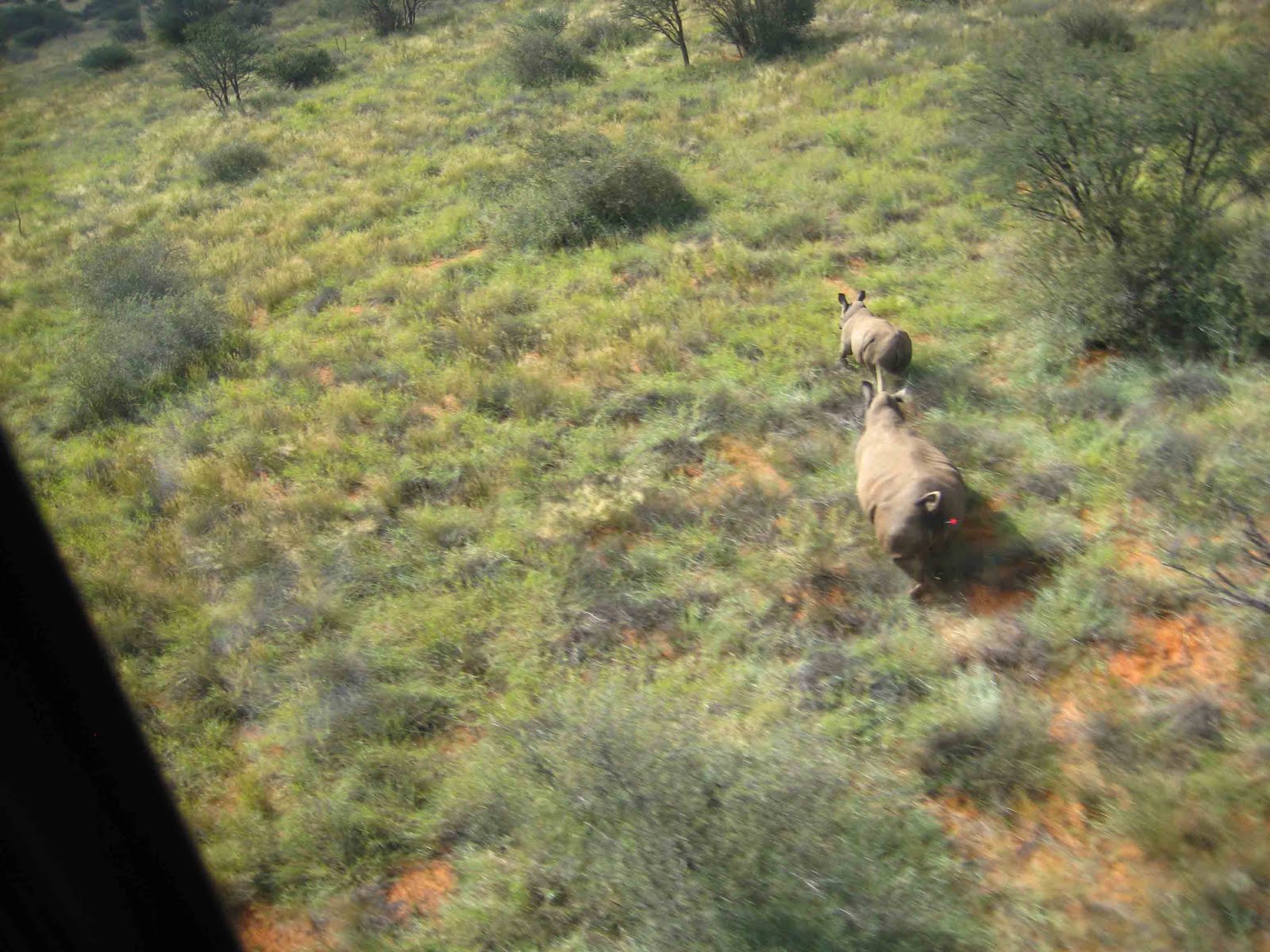
An honour to appear in a picture, but of course very sad about the need to de-horn this rhino. We all love rhinos much more with their horns! Unfortunately this poaching crisis forces humanity to re-think what conservation is about. To me it's very important that the de-horning procedure is not invasive and reversibel: within 3-4 years the complete horn has grown back. Each period a new decision can be made. I would never amputate or make an irreversibel change into a healthy wild animal. That's completely against my idea of wildlife medicine. To help rhinos to survive with a minimal invasive action is the best we can do for them now and hopefully in a decade most rhinos will be able to live with their horns again. If I was a rhino, I would prefer to go to the 'horn-cutter' every 2 years, this period of time to be safer and alive!
We leave a long enough stump to make sure that we don't damage the germinal layer or hit any life tissue. We only cut in dead material. Therefore we can be sure that the rhino does not feel anything. It's the most similar to clipping the hoofs of a horse. With our experienced team it takes around 16 minutes from the time the dart hit the animal to fully awake. We keep the procedure as short as possible. After I administer a full antidote in the bloodvessel, the rhino is 100% awake within a few minutes. Most of the times white rhinos start grazing immediately after waking up. They look happy to me and luckily they don't look into the mirror. Wild rhinos regularly loose their horns, so it's not completely unnatural for them to live without a horn. If you have ever worked with rhinos, you will understand the power of these magnificent animals. A serious attack with 'just a stump' will kill you, a lion or other predator, so calves are still safe next to their mothers.


.

Saturday, March 3, 2012

Magic giraffes

Love giraffes! They are such cool animals. If a person would have written a childrens book about all these amazing wildlife species, without them truely excisting, this person would be a genius. The most creative, out of the box soul ever. How could God create an animal with a very long neck and long legs, what's still able to give birth and drink water? Magic! Can you image in the needed power of the heart to pumb all crucial blood 5-6 meters up in the air? And what about the complexity of bringing down the head for drinking? In an adult giraffe the heart weights around 11kg and is around 61cm long! A complex pressure-regulation prevents excess blood flow to the brain and valves in the venes prevent blood flowing back when the giraffe lowers its head to drink. Because of its hight and body weight, the bloodpressure in the legs of a giraffe is very high. A very tight skin around the legs prevents too much blood from pouring into them. A newborn calf is around 1.8m long and falls literally into life! Magic how nature sorts it all out, isn't it? Fascinating.

Wednesday, February 15, 2012

GREAT NEWS! Making me incredibly happy:)


Three days ago I got called about a sad case. A 4 weeks old rhino calf was found very ill and could not stand up anymore. The mother was standing next to him to defend him, as a good mother is supposed to do. I was asked to have a look and to make a decision about the best option for the calf. When a young animal is too ill to follow its mother it's better to hand-raise it to give it all essential care. This is impossible in the wild.
Because you never know what you're gonna find, it's important to bring all drugs and equipment into the field you can think of. Our clinic is often hours away. The calf could be in shock or have a broken leg. So I loaded my rifles, darts, drugs, surgery equipment, lots of IV fluids and medicine and wound treatment boxes into my jeep and I drove to the prive wildpark, where rangers were waiting for me. They guided me to the place where the calf was laying down, a 30 minutes drive through the reserve. Giraffes, zebras and warthogs looked up when we passed. Then they said to stop. We got out of the car and walked into the bush. I saw an adult rhino standing in thick bush, around 30 meters away from us. Before I could have a look at the calf, she charged us. She run off and as a big suprise the little calf followed her: walking! Wobbly, but walking! We saw a big wound on its flank with a lot of flies around it, so it was clear that we had to treat this today. Especially IV fluids are crucial, as young animals dehydrate quickly in hot weather like this. A calf must always stay with the mother when possible, so when I saw the calf was walking I decided to keep the calf with his mum. Hand-raising a rhino calf is extremely challenging and very stressful for the calf. Only a last option. Luckily this rhino cow was calm and very caring: this calf had the best chances in the wild.
I made two darts with etorphine (10.000 morphine). One for the mother and one (less than one drop) for the calf. First a darted the mother. A nice shot in the hindquarters. I always wait around 3 minutes before darting the calf, so that mother is affected before the calf gets affected by the drugs. It's essential to be able to get to the patient as soon as possible and an awake rhino mother would never allow us! The little baby stoot next to his mum and I could easily dart him on foot. When the mother went down, he stood calmly next to his mothers head. I approached the adult rhino, put a blindfold over her eyes and removed the dart. The little baby was just standing there, half asleep. This scenario was perfect, because now I could monitor the anesthesia (breathing) of both animals! When he fell down, I had all treatments ready. We made some shade and used lots of water to keep both rhinos cool in the hot African sun. I gave him IV fluids and cleaned the terrible wound full with maggots. Two ribs were visible! He also had some other smaller wounds, so he clearly had been attacked by another animal.
After having treated the wound and given him 3L glucose 5% IV, antibiotics, a painkiller, vitamins and anti-parasitic treatment I woke them up together. This was the most amazing experience: the calf run to his mother and started drinking straight away. You saw the milk running next to his mouth. I felt very happy with the decision to keep him in the wild.
It's now almost 3 weeks ago. The wound is healing and the calf is doing very well. Can't express how happy this makes me!


Thursday, February 9, 2012

Rhino poaching goes on...also in 2012


To arrive at a rhino carcass killed for its horn is one the most awful experiences in my life. As a wildlife vet we are regularly consulted to assist with the post mortem of these animals. Thorough forensic research is extremely important to get as much evidence and information about the crime as possible. This will assist in tracking down these criminals, but also to be able to convict them of the crime once they are caught.

The white rhino on these pictures was always grazing around my house. Many friends and family have seen this fantastic animal. I was attached to this friendly young bull. This useless kill brings the poaching very close. Killed for something silly as a piece of horn. I keep repeating myself: it's just HAIR. I will also add a picture I made of a horn what naturally broke off. You can see it's a huge rasta, nothing more!!


In 2011 448 rhinos were killed in South Africa for its horn. Mainly to be used in traditional medicines in Asia (China, Vietnam, Thailand), but also as dagger handles in Jemen. In 2012 already 33 were killed. The poaching is going on at a large scale, with no idea how it's ever gonna stop. The Asian rhinos are suffering even much more. One species was declared extinct last year, the Javan rhino. Tremendously sad to see magnificent species disappearing forever. Do we have to wait until the other species are gone too?? Raising awareness is a great tool: rhino horn does NOT contain any healing capacities! But educating is going to slow. There is no time left and the world population, especially in Asia, is growing rapidly. They all want to get old and stay healthy. Some people have these beliefs and traditions for thousands of years. On top that there is always a 'placebo effect': if a person really believes something silly works, there is a chance that this person somehow will feel better afterwards. Or better put: that person is thinking that he/she is feeling better. Ever tried to convince one person to change such deep beliefs??? You know what I mean.

More about this complicated subject later!

Friday, December 30, 2011

Suffering elephant calf

The mother fell asleep under a tree, luckily nice on her side.

The snare penetrated deep into the tissue, causing horrible suffering.


I treated the wound with disinfectans and a superb cream stimulating granulation and wound healing (called Dutch cheese).


Two weeks ago I got a call out to treat a young elephant in a private game reserve, connected with the Kruger National Park. The little baby was seen by rangers with a snare around her right hind leg.

Snares are round traps made of wire, worldwide used to capture small wild animals. They cause horrible suffering in almost all wildlife species. Local people hang them in the bush in a way that the animals don't see them. These traps can only go more tight, not loose, so the wire penetrates deeper into the tissue of the leg or neck, even until the bone or through the trachea. We have seen snares around the neck of lions, leopard, wild dogs, jackals, hyenas and the legs of elephants, giraffes, rhinos, zebras, kudus and many more species. E.g. mountain gorillas are also often affected by snares. It's a worldwide conservation problem! As long as the wire is present, the wound will only get worse and worse, until the animal dies of anorexia or septicemia. Luckily, most of the time, when the wire is removed the healing capacity of a wild animal is good.

This little elephant was very lame on that leg, but other than that still in fairly good shape. Hopefully we were still in time. She was very lucky that she was seen by rangers. Because these elephants are completely wild and there are no fences around this huge area (they can walk to Mozambique if they feel like), it's important to immediately act if you see a problem like this. If you loose the herd, you probably never find them again.

Luckily, we found one of the most experienced helicopter pilots in the country to assist me and I could fly with him to the reserve. So, instead of loading my drugs in my 4x4 to go to a patient, we loaded the rifles, drugs and other equipment in the helicopter. After half an hour flying we landed in the reserve and the rangers were waiting for us. They were following the herd to make sure to not loose the wounded calf. The manager of the reserve told me that the calf was younger than 12 months. At this age it is impossible to chase away the mother. When elephant calves are a bit older, there is a chance that the mother runs away from the noise of the helicopter, together with the other herd members. But at this young age, an elephant mother will fight with her life to protect her calf. Also, when a calf is darted and asleep and the mother does not want to leave, you have dart this mother and wait until she goes to sleep. This can be risky for the calf, which is already under anesthetics. Therefore, when in doubt, it's better to always dart the mother first, wait until she is a little bit affected and then dart the calf. This way, you can always get to your patient!

So I started to make 2 darts: one for the mother and one for the calf. In the same time, the ground team drove to the location where the rangers were waiting close to the herd. When darting elephants, an experienced ground team is crucial. An elephant can't lay on its belly, but must always lay on his or her side. When laying on their abdomen, the pressure in the abdomen prevents them from breathing and they can die. Elephants can't breath through their mouth, so laying on their trunk can also kill these giants. Two very important things to check and when I dart from the helicopter, we can't always land immediately. The family members often come back to help the sleeping elephant(s), so staying in the air is sometimes essential to guarantee the safety of the people on the ground. In heavy terrain or thick bush we often can't find a landing place. So the people on the ground are an important part of the team.

The mother fell asleep under a tree, nice on her side. I jumped out of the chopper and darted the calf on the ground next to her mother. It went very well and didn't cause too much stress. We removed the snare and I treated the wound, gave antibiotics and a painkiller. Both mother and calf woke up nicely in the same time. They wandered off into the bush together, probably wondering what happened, but probably also very relieved. Let's hope that she doing well!

Thursday, December 8, 2011

Time flies!

Time flies when you're having fun! The fact that it's been quiet on this blog, does not mean that life as a wildlife vet has been boring. Although a human being even seems to get used to darting rhinos from a helicopter (quite insane, but true), in this job you must always be on your toes. Working with dangerous, free-roaming wild animals is never a routine and things always go different than expected. Therefore I don't even expect anything anymore. We prepare as good as we can, concentrate, start the job and see from there. The best way to practise in staying open minded, thinking positive and finding solutions!


It's been hectic since I started a new job at a private wildlife practise six months ago, because I am also continuing all wildlife vet work for my old boss. The winter months are the most busy for a wildlife vet in South Africa, because all actions with wildlife must take place in this colder period from March until October. In the heat of the summer it can be dangerous to immobilise wildlife, as they easily get over-heated. This means that we've darted, moved, collared, treated, de-horned and/or translocated hundreds of animals in the past 6 months...including giraffes, rhinos, buffalos, sable and roan antelopes, zebras, lions, elephants and many antelope species (sable, roan, kudu, impala, nyalas, waterbuck, eland etc). We've been called out for many exciting jobs, so again some interesting experiences to share. Hopefully some time in the coming summer (here it's getting hot now) to write them up for you. I first wanna share some more pics with you. The better you get to know wild animals, the more amazing they get. So much we can learn from all of them, each individual in their own unique way, if we're willing to be silent and 'listen'.


Monday, October 31, 2011

Wednesday, June 8, 2011

Tswalu Kalahari from the air


Tswalu Kalahari, the largest private game reserve in South Africa covering 100.000 hectares, is absolutely stunning (http://www.tswalu.com/). It takes a long way to get to this remote area in the Kalahari desert, close to Botswana, but it's truely worth it. As a wildlife vet, it's fantastic to be able to see so many magic places from the air!

Wednesday, April 27, 2011

Walking buffalo bulls

Loaded 4 African buffalo bulls in a trailer yesterday: they were sold to another place. It's great how trained the staff is now: 2 people leading the bull by his horns, 2 guys assisting the bull to get up and I always hold the tail tightly as a brake. They sometimes go too fast, what can be dangerous for the guys leading the animal by the rope into the trailer. To give these guys time to first put the rope through the roof and come out of the trailer, I always brake the bull in front of the trailer, before leading him in. The blindfold is crucial! When the blindfold comes off, the situation can get very dangerous. Therefore I always check this well, prior to partially waking up an African buffalo, one of the most dangerous animals in Africa. It needs practise to get this right, so please don't try this at home! 

Saturday, April 23, 2011

Heart breaking


The mother of the calf first had to sleep prior to darting the calf.

We took the opportunity to de-horn her to make her safer for the horrendous rhino poachers.

This little rhino calf I will remember forever. It was heart breaking to see him suffer so much. He was seen in good health, happily with his mother, just 2 days earlier. The game guards always try to check all our rhinos every day. Yesterday they were not found in the thick bush, which is not abnormal. But this morning they found the calf, severely distressed, dehydrated and paralysed in the hind legs. He was desperately trying to get up, but could not. The hot sun was not making things better either. I was terribly worried. His mother was standing next to him and an adult bull was waiting at around 20 meter distance. It seemed that the mother was defending her calf against attacks from this bull. Rhino bulls sometimes kill other rhinos, especially calves, and this bull was known to be aggressive. So our first thoughts were that trauma caused this acute paralysis. The prognosis of such a severe problem is poor, but of course we tried everything possible to save this calf. At first I had to immobilize the mother, as she would never allow us to come close to her fragile baby. After she fell asleep, I could dart the calf. It's important to always first wait until you are able to approach a wild animal before darting it. Dehydration, stress and myopathie (a muscle problem caused by prolonged stress, muscle strain and heat) made the anesthetics very dangerous.
Because I was worried that the calf might not survive the anesthetics, I used the lowest possible dosage of Etorphine: one drop. It worked well. The animal was asleep within 5 minutes. First thing I did was put a drip in both ears to administer as much fluid (Glucose 5% and Ringers) as possible. Then we took the opportunity to de-horn the mother to make sure that she was safe for poachers (horrible that this is necessary, but in the moment it's best for the animal).
Then we loaded the calf on the trailer to bring him to our hospital to be able to give the best possible treatment. We continued the drips during the hour journey to our quarantine facilities. The anesthetics (heart rate, breathing, blood pressure and oxygenation) were nice and steady. On top of glucose and Ringers IV, I gave a sedation to keep him calm, lots of different vitamins, minerals, antibiotics (meningitis was one of my differentials) and anti-inflammation/painkillers. With hay we made a nice soft bed for him to avoid any sores. When he was laying nicely, I gave the antidote for the etorphine. He survived the journey and anesthetics well, but the paralysis in his hind legs continued. Unfortunately the next morning he died. A very sad and frustrating case.


When the calf was asleep we put him on a stretcher to load him on a trailer.

After an hour journey we arrived at the quarantine facilities where we continued treating him.

Saturday, April 2, 2011

Kruger NP

stripes

A question.... Are zebra's white with black stripes or black with white stripes??

In the uterus the foal is completely black at first and later the white stripes develop. So officially a zebra is black with white stripes. But in an adult zebra, the ground colour of the skin is white, also under the black stripes; this is seen when you shave the fur. So both answers are correct.
You see, grey is often the colour what answers complicated questions the best!

Flying vet

A helicopter and a skilled pilot (thanks Johan) are an amazing help with capturing wild buffalos. Suddenly you don't have to worry about tracking carefully in the bush to prevent the animals running away. On foot in the bush, you only get one chance and sometimes zero. Also a bad shot punishes you immediately, because sometimes we don't see the animal again for 2 weeks or so. From a helicopter the work is very different. When an animal runs off, it's fairly easy to find it again. After having darted around 3.500 wild animals on foot, horseback, a jeep and even a tree (waiting for hours and hours for one lucky shot), it was such a pleasure to dart from a helicopter. Because the terrain was open and the buffalos could see us from a long distance, it was impossible to approach the wild herd of buffalos within 50 meter or so. We had to catch the complete herd of 23 buffalos to move them to another area. Therefore we did not have another option than renting a helicopter and pilot. Luckily my boss agreed. The darting (practise makes lucky!) and all anesthetics went very well. We took blood to test for Brucella, Corridor's disease and Foot and Mouth Disease and we did skin tests for Tuberculosis. These are the 4 'controlled diseases' in South Africa. African buffalos must be free of all these 4 diseases prior to getting a permit to leave an area (if they carry one of them, they can infect domestic cattle, which would be a disaster). All tests were negative, so I loaded all buffalos in a truck last week. The herd moved to their new home where they are roaming freely again!